前 AKB48 成員內田真由美嫁港男: 「日女外嫁」熱潮殺到,日韓通婚創 2000 年以來新高| 愛情顧問解說
🌐 English version
Former AKB48 Member Uchida Mayumi Marries a Hong Kong Man: The "Japanese Women Marrying Abroad" Boom Hits, Japan-Korea Marriages Reach Highest Level Since 2000 — A Love Advisor Explains
📰 What Happened
Uchida Mayumi, now 32, joined the Japanese idol group AKB48 in 2007. In 2010 she won the first "janken (rock-paper-scissors) tournament" and took the center position on the group's 19th single, "Chance no Junban," earning her the nickname "the Janken Queen." After leaving the group in 2015, she moved into the restaurant business and opened a yakiniku restaurant, Yakiniku IWA, balancing life as both a celebrity and a businesswoman.
In early October she announced her marriage on social media. Her post featured a Hong Kong SAR flag emoji and the words "please take good care of me from here on" and "thank you," sending netizens into a frenzy of speculation about her partner's identity. The next day she shared wedding photos and revealed the answer herself: her husband is a Hong Kong man.
Details of the wedding have since emerged. The couple held a grand wedding banquet in Japan on October 10, with many tables and several former AKB48 teammates in attendance, including Kitahara Rie, Takajo Aki, and Oya Shizuka. During the banquet, Uchida Mayumi showed off her Cantonese: "Thank you all so much for coming to our wedding!" In her speech she and her husband at her side hugged and wept. The groom's family flew to Japan especially for the ceremony, including his 93-year-old grandmother.
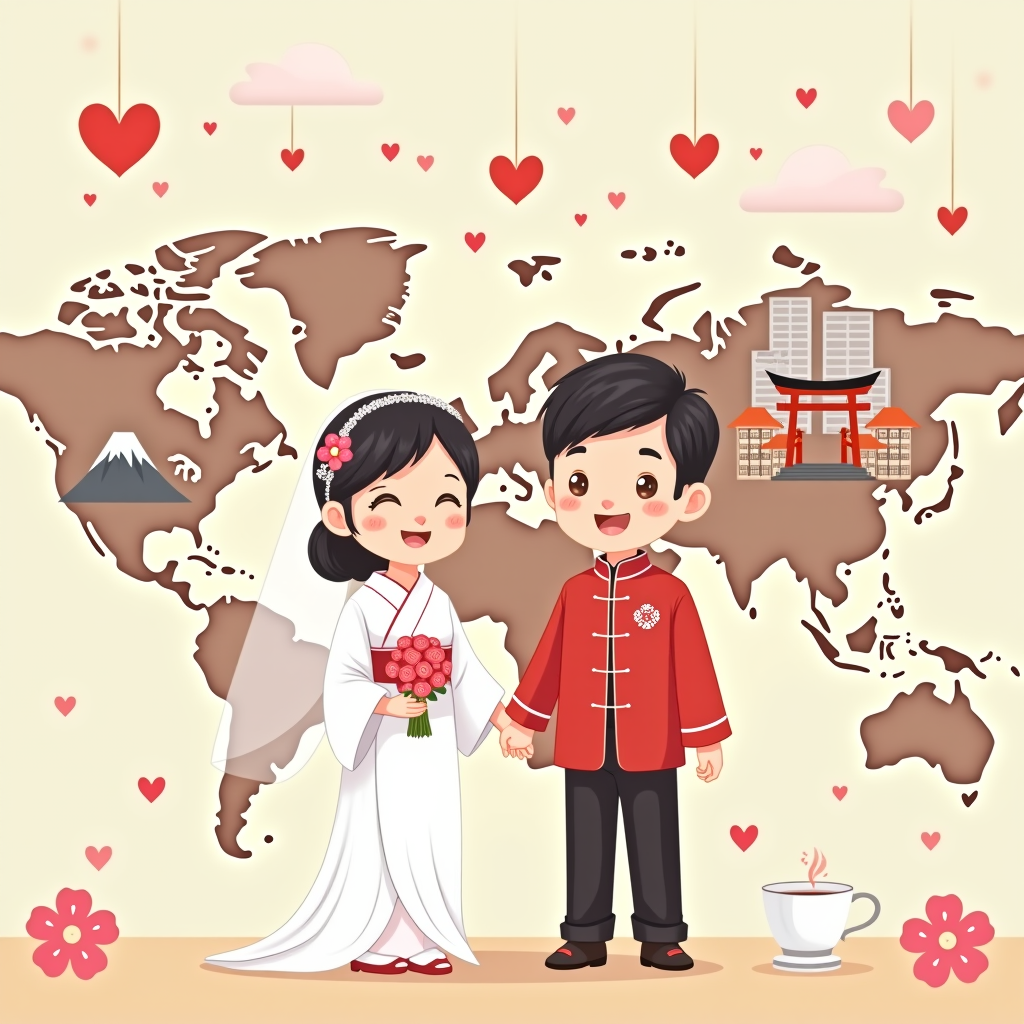
Beyond the Western-style banquet, she also followed Hong Kong tradition by wearing a Chinese qun kwa wedding dress and kneeling to serve tea to her husband's grandmother. On social media she wrote that she had called her "grandmother" for the first time, formally becoming part of her husband's family, and promised to work hard at learning Cantonese. Earlier she had also visited Man Mo Temple to take Chinese-style wedding photos. For guest return gifts, the couple chose teacups from the long-established Hong Kong brand Lin Heung Tea House.
Sharp-eyed netizens noticed that the background of the tea ceremony clip appeared to be a Hong Kong public housing estate flat, plainly decorated, and concluded that her husband did not come from a wealthy family. The reaction was overwhelmingly one-sided: people praised Uchida Mayumi for not caring about material things, and admired her husband for winning the heart of a beauty through his own hard work and sincerity, calling him "the pride of Hong Kong men" and saying he had "brought honor to Hong Kong."
At the same time, the trend of Japanese women marrying abroad is heating up. According to the Japanese newspaper Tokyo Shimbun, the trend of Japanese women seeking foreign partners has exploded. The latest official data from Statistics Korea shows that Japan-Korea cross-border marriages rose sharply after the pandemic, with 1,483 couples marrying last year, the highest figure since 2000.
Moa Love, a Tokyo matchmaking agency specializing in pairing "Korean men with Japanese women," revealed that this year alone its female membership has doubled compared with last year, with the vast majority joining because they fell for K-pop or binge-watched Korean dramas. As long as the man currently lives in Korea, almost all the Japanese women are happy to move there after marriage. The agency also noted that around 40% of its Korean male members know no Japanese at all, but with AI translation apps growing more capable by the day, language is no longer a barrier.
The Japanese women interviewed gave strikingly consistent reasons: foreign partners are good at expressing love directly in words and are attentive in everyday life, for example, walking on the outer side of the road to shield them. One member admitted bluntly: "Because I'm cherished so well, honestly, once you've dated a Korean man, you start to feel Japanese men aren't satisfying enough!"
On the other side, foreign men also tend to choose Japanese women. The report analyzes that traditionally a Korean man marrying a local woman often has to shoulder heavy financial burdens such as preparing housing, and the first questions are things like "Do you own a home? What's your salary?" Japanese women, by contrast, generally tend to look first at whether their personalities are compatible, and many Korean men say outright that dating Japanese women feels more relaxed.
Locally in Hong Kong, cross-border marriage itself is changing too. According to Census and Statistics Department figures, among Hong Kong's cross-border marriages in 2024, the proportion of Hong Kong women marrying mainland Chinese men rose to about 40%, breaking past 10,000 cases for the first time, while in 1991 that proportion was just 6.1%. The same year, the median age at first marriage for Hong Kong people rose to 32.6 for men and 31 for women, a 34-year high; divorce decrees totaled 18,938, up 5.38% year on year.
👩💼 The Advisor's Take
① The phrase "pride of Hong Kong men" exposes the hidden bar in Hong Kong's dating market
The most noteworthy thing about this news is not how lavish the wedding was, but where the netizen reaction landed. People were praising not just a couple, but the fact that "the husband doesn't look like he's from a wealthy family, yet he married a Japanese star."
Imagine this: if today a local woman were marrying into a public housing family, would the internet also overwhelmingly praise her for "not caring about material things"? Probably not, because "not minding that the other person lives in public housing" is not treated as a virtue in the local market, only as a "basic requirement."
That gap reflects exactly how conditional Hong Kong's dating market is. Psychology and behavioral economics use the idea of a "marriage market" to understand partner selection: everyone enters carrying a set of "capital" — economic standing, looks, education, emotional labor, cultural capital (language, taste, social skills). The market's "pricing" is not about absolute value, but about value relative to your competitors.
So what is a Hong Kong man's selling point in the international market? The reports spell it out clearly: considerate, respectful of a woman's own career, fluent in both Chinese and English. In the local Hong Kong market, these three things are table stakes, even taken for granted; but in a market where women are expected to be "man works outside, woman runs the home," they become scarce goods. The same set of capital, in a different market, commands a different price.
② Japanese women "marrying abroad": it's not about which nationality is better, but the gap between "expression" and "expectation"
"Once you've dated a Korean man, you start to feel Japanese men aren't satisfying enough" — this is the most easily misread line in the whole report.
Let's first pull apart three completely different situations:
(1) Genuinely having experienced a comparison. She has met a partner willing to express love in words and to take the initiative to care for her, and by comparison, someone who used to "act instead of speak" seems cold. This is a judgment based on experience, but note this: she is comparing "the new partner at his very best" with "the old partner in his everyday state."
(2) Just falling for dramas and joining up. Many Japanese women got the idea from being fans of K-pop and binge-watching Korean dramas. Psychology calls this a "parasocial relationship": viewers form a one-way emotional bond with a character on screen, and unconsciously treat the scripted behavior as a reasonable expectation for reality. This situation carries the highest risk, because what you fall for is an "image," not a person.
(3) Changing lanes. Some people don't have an edge in the local market (age, finances, divorce history), so the international market amounts to a different pool of rivals. This isn't a bad thing, but changing your rivals doesn't change your own way of relating to a partner.
As for "Japanese men aren't satisfying enough," read it carefully. Japanese men's "poor expressiveness" is largely a cultural product: long working hours, suppressed emotions, a habit of using actions and responsibility in place of sweet talk. That doesn't mean they don't love you. The most common mistake in cross-cultural comparison is using another country's "highlight reel" to compare with your own local "everyday full-length film."
③ AI translation solves language, but it can't solve an argument
The report mentions a key detail: around 40% of the Korean male members know no Japanese at all, but thanks to AI translation apps, language is no longer a barrier.
Technically that's true, but intimacy doesn't run on "accurate information." The psychologist John Gottman, who studies intimate relationships, points out that whether a couple handles conflict well depends not on the literal content but on tone of voice, eye contact, whether you pause, and whether you give the other person an easy way out — none of which a translation app can help with. In an argument, the thing that hurts most is often half a second of tone, not the meaning of the sentence.
So lowering the language barrier defers the question of "can you communicate," it doesn't solve it. The real hurdle is the "default settings" of values: where to live after marriage, whose family's holidays take priority, how to address each other's parents, and how money gets divided.
④ The smartest thing Uchida Mayumi did wasn't learning Cantonese
Look back at what she did: wore the qun kwa, knelt to serve tea, called her "grandmother" for the first time, chose Lin Heung Tea House teacups for return gifts, and promised to learn Cantonese.
The common thread running through this string of actions is this — she acknowledged the "default settings" of the other side's culture, while publicly signaling that she would not ask his whole family to switch to her way of living. For a cross-cultural marriage, that is more persuasive than any words of love, because what her husband's family wanted was not a foreigner willing to learn Cantonese, but a daughter-in-law who "won't pull my son away from me."
Academic research offers two sides on the divorce risk of cross-cultural marriages: some studies suggest that inter-ethnic and cross-cultural marriages divorce at higher rates, while others find that when the two sides' socioeconomic status and education level are similar, the gap narrows sharply. The conclusion is not "different nationalities never work," but that whether resources and values align is the real dividing line.
Hong Kong's data offers indirect confirmation: as cross-border marriage numbers rise, the median age at first marriage has hit a 34-year high and divorce decrees are up 5.38% year on year. Later marriage, cross-border marriage, and divorce all rising in step points to one thing — marriage has shifted from "a task to be completed on a schedule" to "a choice you must make and bear yourself."
⑤ The most dangerous way to read this news
The report actually quotes a few clear-eyed netizens: "It's true Korean men are popular, but not just anyone can have one, the prerequisite is that he has to be handsome," and "What everyone likes is just the oppa image in the drama. Better not give yourself too many fantasies!"
Treating one success story as a general rule is classic "survivorship bias" — you see the winners, but not the silent majority whose relationships quietly fizzle out. The bigger risk is treating "marrying a foreigner" as a way out, as an escape from frustration in the local dating market. Switching markets only switches your batch of rivals; it doesn't automatically upgrade your own ability to relate to a partner.
💡 What You Can Learn
- Before you look at the "qualifications," see whether they're the same person in front of you — for long-distance and cross-border relationships, the biggest risk isn't distance, it's that what you've fallen in love with is actually a version you imagined.
- If you're considering a long-distance or cross-border relationship, talk through three things first — which city you'll live in after marriage, how you'll address and deal with each other's families, and how you'll handle religion and holidays. These three things predict the future better than "I love you."
- Don't conclude "foreigners are better" — what your partner may want is someone who "knows how to express themselves," not a foreigner. Ask, and don't fill in the blanks yourself.
- Do one thing Uchida Mayumi's way, something "the other family can see" — one ritual, one learned form of address, one thoughtful return gift, is more useful than saying "I'll adapt" ten times.
- Hong Kong men don't need "foreigners who recognize quality" to prove themselves — respecting a partner's career and being willing to share housework are advantages locally too; it's just that no one specially praises you for them.
- Also ask yourself: do I want a better partner, or do I just want an arena that's easier to win? — the former is growth, the latter is escape.
Talk to a LoveWise love advisor — we're always here to talk 💕
📰 事件背景
現年 32 歲嘅內田真由美,2007 年加入日本女團 AKB48,2010 年喺首屆「選拔猜拳大會」奪冠,拿下第 19 張單曲《Chance no Junban》嘅 Center 位置,被稱為「拳后」。2015 年離隊後,佢轉戰飲食業,開設燒肉店「燒肉 IWA」,一直兼顧藝人同商人身分。
10 月初,佢喺社交平台公布婚訊,帖文附上香港特區區旗 Emoji,並寫下「今後請多多指教」同「多謝」,引來網民瘋狂猜測另一半身分。隔日佢再晒婚照,親自揭曉答案:丈夫係香港人。
婚禮細節陸續曝光。兩人已於 10 月 10 日喺日本舉行盛大婚宴,筵開多席,多位前 AKB48 隊友包括北原里英、高城亞樹、大家志津香都有出席。席間內田真由美大晒廣東話:「好多謝大家嚟參加我哋婚禮!」致辭時更一度同身旁丈夫相擁而泣。男方家人專程飛往日本觀禮,當中包括高齡 93 歲嘅嫲嫲。
除咗西式婚宴,佢亦跟足香港傳統,身穿中式裙褂跪地向夫家嫲嫲敬茶,並喺社交平台寫道,自己第一次稱呼對方為「嫲嫲」,正式成為夫家一份子,更承諾會努力學好廣東話;早前佢亦去過文武廟影中式婚照。賓客回禮揀咗香港老字號「蓮香樓」嘅茶杯。
有眼利網民發現,敬茶片段背景疑似係香港公共屋邨單位,裝潢樸實,因而推斷丈夫並非出身大富之家。網民反應一面倒:大讚內田真由美不重物質,亦欣賞其丈夫靠個人努力同真心娶得美人歸,留言稱佢係「港男之光」、「為港爭光」。
同一時間,日本女性「外嫁」趨勢正在升溫。 據日媒《東京新聞》報道,日本女性尋找外國伴侶嘅趨勢出現爆發式增長;韓國統計廳最新官方數據顯示,日韓跨國婚姻喺疫情後急劇上升,去年兩國通婚對數高達 1,483 對,創下自 2000 年以來嘅最高紀錄。
東京一間專做「韓國男性 × 日本女性」配對嘅婚友社「Moa Love」透露,單單今年,機構嘅女性會員人數就比去年足足增加一倍,絕大多數係因為迷上 K-POP 或者煲韓劇而萌生入會念頭;只要男方現居韓國,幾乎所有日本女性都樂意婚後移居當地。該社又指,約有四成韓國男性會員完全唔識日文,但 AI 翻譯 App 功能日益發達,語言溝通早已唔算障礙。
日女受訪時講嘅理由好一致:外國伴侶擅長用言語直接表達愛意,日常相處無微不至,例如行路會主動行喺馬路外側護住女生。有會員更坦言:「因為被對方好好珍惜著,說實話,一旦和韓國男性交往過之後,就會覺得日本男性不夠令人滿意!」
另一邊廂,外國男性亦傾向揀日本女性。報道分析,傳統上韓國男性同當地女性結婚,往往要承擔準備住房等沉重經濟負擔,動輒先講「有冇樓、年薪幾多」;相反日本女性普遍傾向先睇彼此性格合唔合得來,唔少韓國男性直言同日本女性交往感覺更輕鬆。
香港本地方面,跨境婚姻本身亦正在變化。 根據政府統計處數字,2024 年香港跨境婚姻之中,港女嫁內地男嘅比例升至約四成,首次突破 1 萬宗,而 1991 年呢個比例只得 6.1%。同年港人初婚年齡中位數升到男 32.6 歲、女 31 歲,創 34 年新高;離婚判令則有 18,938 宗,按年升 5.38%。
👩💼 顧問分析
① 「港男之光」四個字,照出香港婚戀市場嘅隱形門檻
呢單新聞最值得留意嘅,唔係婚禮幾盛大,而係網民反應嘅落點。大家讚嘅唔止係一對新人,而係「丈夫唔似大富之家,都娶到日本女星」。
試想像:如果今日係一位本地女生嫁入公屋家庭,網上會唔會同樣一面倒讚「唔重物質」?大概唔會,因為「唔嫌對方住公屋」喺本地市場唔會被當成美德,只會被當成「基本要求」。
呢個落差,正好反映香港婚戀市場嘅條件化程度。心理學同行為經濟學用「婚姻市場」(marriage market)去理解擇偶:每個人都帶住一組「資本」入場—經濟能力、外貌、學歷、情緒勞動、文化資本(語言、品味、社交能力)。市場嘅「定價」唔係絕對值,而係相對同行對手。
港男喺國際市場嘅賣點係咩?報道寫得好清楚:體貼、尊重女性自主事業、精通兩文三語。呢三樣嘢,放喺香港本地市場,係「基本盤」,甚至被視為理所當然;但放喺一個女性喺本地被要求「男主外、女要顧家」嘅市場,就變成稀缺品。同一組資本,唔同市場,唔同價錢。
② 日女「外嫁」:唔係邊個國籍好啲,係「表達」同「預期」嘅落差
「一旦和韓國男性交往過,就覺得日本男性不夠令人滿意」—呢句係整篇報道最容易被誤讀嘅一句。
先拆開三種完全唔同嘅情況:
(一)真係經歷過對比。 佢遇過一個願意用言語表達、會主動照顧嘅伴侶,對比之下,原本習慣「行動代替說話」嘅對象就顯得冷淡。呢種係經驗判斷,但要注意:佢比較嘅係「新對象嘅最好狀態」同「舊對象嘅日常狀態」。
(二)只係煲劇入會。 唔少日本女性係因為迷 K-POP、煲韓劇而萌生念頭。心理學叫「準社會關係」(parasocial relationship):觀眾同劇中角色建立單向情感連結,會不自覺將劇本寫好嘅行為模式,當成現實嘅合理期望。呢種情況風險最高,因為你動心嘅係「形象」,唔係「人」。
(三)換賽道。 有啲人喺本地市場嘅條件唔佔優(年齡、經濟、離婚紀錄),跨國市場等於換一個對手池。呢個唔係壞事,但換對手唔會換走你自己嘅相處模式。
至於「日本男性不夠令人滿意」,要小心閱讀。日本男性「唔擅表達」好大程度係文化產物:工時長、壓抑情緒、習慣用行動同承擔代替甜言蜜語,唔等於唔愛。跨文化比較最常犯嘅錯,就係用外地嘅「精華片段」,去比本地嘅「日常全片」。
③ AI 翻譯解決語言,解決唔到吵架
報道提到一個好關鍵嘅細節:約四成韓國男性會員完全唔識日文,但因為有 AI 翻譯 App,語言唔再係障礙。
技術上係真嘅,但親密關係唔係靠「資訊準確」運作。研究親密關係嘅心理學家 John Gottman 指出,伴侶衝突處理得好唔好,關鍵唔在字面內容,而喺語氣、眼神、有冇停一停、有冇俾對方台階—呢啲全部係翻譯 App 幫唔到嘅。吵架嗰陣最傷人嘅往往係半秒嘅語氣,唔係嗰句子嘅意思。
所以語言門檻降低,係把「識唔識溝通」呢個問題延後,唔係解決。真正嘅關卡係價值觀嘅「默認值」:婚後住邊、邊個屋企嘅節日做主、點稱呼對方父母、錢點分。
④ 內田真由美做得最聰明嘅,唔係學廣東話
回頭睇佢做咗咩:穿裙褂、跪地敬茶、第一次叫「嫲嫲」、回禮用蓮香樓茶杯、承諾學廣東話。
呢一串動作嘅共通點係—佢承認咗對方文化嘅「默認值」,同時公開表示自己唔會要求對方全家改用佢嘅方式生活。對一段跨文化婚姻嚟講,呢個比任何情話都有說服力,因為佢夫家要嘅唔係一個肯學廣東話嘅外國人,而係一個「唔會令我個仔同我疏遠」嘅新抱。
學術研究對跨文化婚姻嘅離婚風險有兩面講法:有研究指跨族、跨文化婚姻嘅離婚率偏高,亦有研究指當雙方社經地位、教育程度相近時,差距會大幅收窄。結論唔係「唔同國籍就一定唔得」,而係「資源同價值觀係咪對齊」才是分水嶺。
香港嘅數據側面印證呢點:跨境婚姻數字上升嘅同時,初婚年齡創 34 年新高、離婚判令按年升 5.38%。遲婚、跨境婚、離婚三者同步上升,講嘅係同一件事—婚姻由「按時間表完成嘅任務」,變成「要自己揀、自己承擔嘅選擇」。
⑤ 呢單新聞最危險嘅讀法
報道入面其實有網民講得好清醒:「韓國男性受歡迎確實是事實,但並非人人皆可,前提必須要是帥哥」、「大家喜歡的只是劇中的歐巴形象,還是不要給自己太多幻想吧!」
將一個成功案例當成通則,係典型嘅「生存者偏差」(survivorship bias)—你見到嘅係贏咗嘅人,見唔到無聲無息收場嘅大多數。更大嘅風險係,將「娶/嫁外國人」當成一條出路,用嚟逃避本地婚戀市場嘅挫敗。換一個市場,只係換一批對手,唔會自動升級你自己嘅相處能力。
💡 普通人啟示
- 先睇「條件」之前,睇佢對你面前嘅人係咪同一副樣—異地、跨國戀最大嘅風險唔係距離,係你愛上嘅其實係想像出嚟嘅版本
- 考慮異地或跨國戀,先傾三件事—婚後住邊個城市、點稱呼同應對對方家人、宗教同節日點過。呢三件事比「我愛你」更能預測將來
- 唔好用「外國人比較好」做結論—對方想要嘅可能係「識表達」,唔係「外國人」。問清楚,唔好自己補完
- 學內田真由美做一件「對方家人睇得明」嘅事—一個儀式、一句學識嘅稱呼、一份有心嘅回禮,比講十次「我會適應」有用
- 香港男性唔需要靠「外國人識貨」先證明自己—尊重對方事業、肯分擔家務,呢啲喺本地一樣係優勢,只係冇人特別讚你
- 亦都要問自己:我係想要一個更好嘅伴侶,定係只係想換一個更容易贏嘅場?—前者係成長,後者係逃避
搵 LoveWise 嘅愛情顧問傾下,無論你係單身、拍緊拖定考慮結婚,我哋都可以陪你慢慢傾 💕